Wartime nurse. Pianist. Mother of four. Keeper of the family stories.
Their life, as remembered
7 memories
1928· Leeds, England
Born in a winter so cold the milkman skipped deliveries
Eleanor Margaret Whitfield arrived at 4:17am on a January morning in a small brick house in Leeds. Her father, a railway clerk, later said "she made her own heat" — no blanket could contain her. Her mother played the piano softly in the next room while labour took its time.
Her mother's favourite photo — kept in the kitchen drawer for 70 years.
Shared by
“Mum always said Eleanor cried for six hours straight when she was born. Then, apparently, she never cried again — not at her First Communion, not at my wedding, not even when Dad died. She just set her jaw.”
Margaret Whitfield·Younger sister
1938· Leeds, England
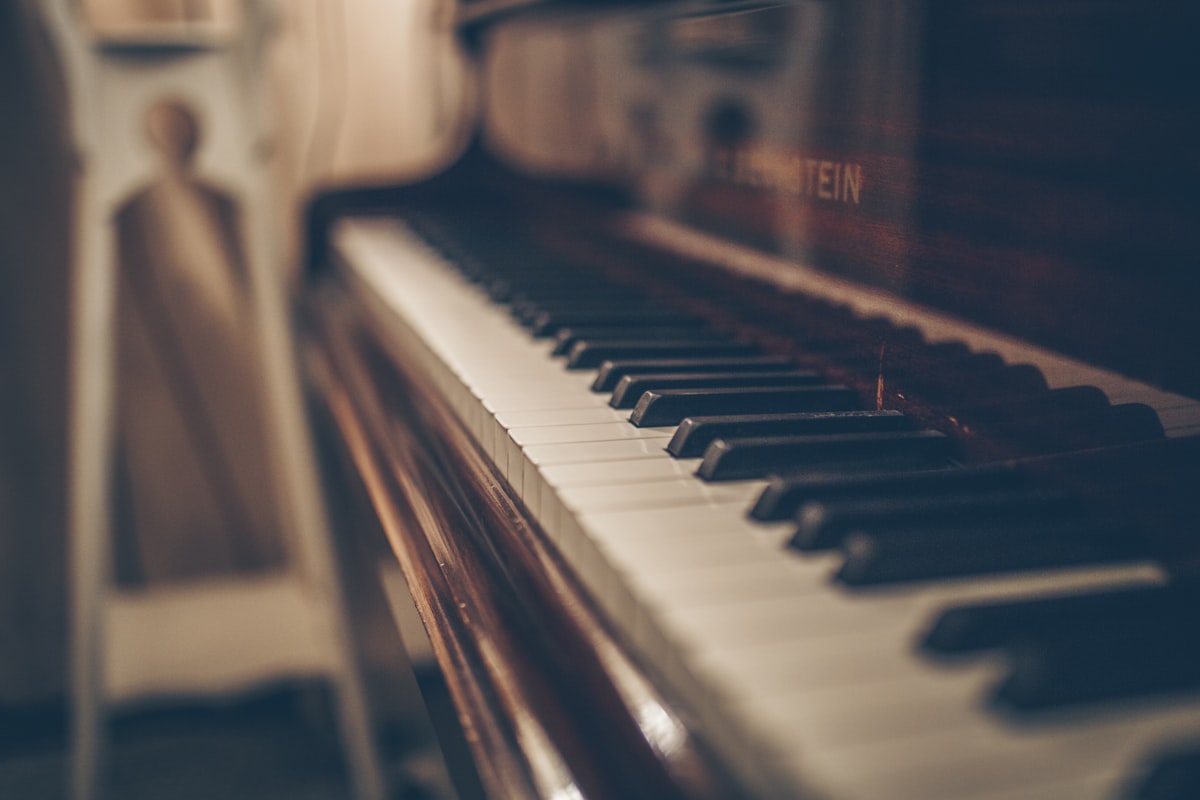
Her first piano — second-hand, three missing hammers
Her father brought home a battered upright piano he'd won in a card game with a widowed schoolmaster. Three keys didn't work. She learned to compose around the silences. She said later that it taught her more than any teacher ever did: that absence is part of music.
The piano Dad won at cards. It's still in her sitting room.Posed by her mother — she hated having her picture taken.
Shared by
“I remember her playing Clair de Lune on that piano and stopping dead at the B-flat every time, like she was waiting for an echo. Then she'd carry on. It was her signature.”
James Whitfield·Son
1943· Manchester Royal Infirmary
Nursing college, fifteen years old and pretending to be eighteen
The war made truth-telling optional. She was tall for her age and the matrons turned a blind eye. She wrote home about bandages, not about the young men who asked her to take down letters for their mothers in the hours before surgery. She kept those letters. We found the bundle in 1994 — over a hundred of them, each in its own envelope marked with a name and a date.
Uniform was two sizes too big — she stuffed the hem with newspaper.Each envelope marked with a name and a date. She remembered every one.
Shared by family & friends
“My grandfather was one of her patients in 1944. He kept the letter she wrote to his mother for him. I still have it. She got my grandmother's address exactly right from memory, decades later, when I asked.”
Dr. Harold Lin·Colleague's grandson
“Gran used to read me one letter every Christmas Eve. Not to share the contents — most of them were private — but to say each young man's name out loud one more time.”
Sarah Chen-Whitfield·Granddaughter
1951· Between Leeds and York
Met Thomas on a train that was three hours late
He offered her his seat. She offered him half a cheese sandwich. By the time the train reached York they had planned the outline of their life: four children, a piano in the sitting room, a garden big enough for a rabbit hutch. They kept to three of those. The rabbit was too much work.
The platform where they met. Demolished in 1967.Fifteen months from cheese sandwich to altar.
Shared by family & friends
“"It wasn't the sandwich. It was that she'd already planned how to cut it in half before I'd said a word. I knew then."”
Thomas Whitfield (deceased)·Husband
“Dad told this story at every family dinner for fifty years. Mum would roll her eyes at the sandwich part every single time. We think she loved the retelling.”
Ruth Whitfield·Daughter
1985· Home — front door, 11:04pm
What she told me the night I left for university
"The world will ask you to be certain. You don't have to be. Just keep going and be kind about it." She pressed a ten-pound note into my hand and closed the door before I could see her face.
I kept the ten-pound note until 1991. Spent it on flowers for her birthday.
Shared by
“She said something almost identical to me the year before. I thought it was just for me. I now know she said a version of it to every grandchild, too. "Keep going and be kind about it." We've put it on her memorial.”
James Whitfield·Son
2003· Eleanor's sitting room, Harrogate
She still remembered every passenger name from the 1943 ward
My daughter (her great-granddaughter, aged six) asked her if she remembered any of the soldiers. Eleanor closed her eyes and recited twenty-three names, their hometowns, and what they were reading when she last saw them. "They made a deal with me," she said. "I'd remember them if they didn't come home." Most of them didn't.
Four generations in the frame, if you count the man in the portrait above.
Shared by
“I was six. I didn't understand what dying meant back then. I just knew Gran was keeping a promise to people I'd never met, and that it was the most serious thing she had ever done. I still think about it.”
Lily Chen-Whitfield·Great-granddaughter
2019· Harrogate
The recording she made for her great-grandson, never sent
We found it on a cassette labelled "For Jacob — when he's old enough". Ten minutes of her voice, unhurried, telling him about the smell of sheets dried on the line in the 1950s and why you should never trust a man who doesn't notice weather. She laughed twice. She sang a few bars of a lullaby. The cassette clicked off mid-sentence.
Recorded on her old BBC-issue dictation machine. We digitised it in 2021.
Shared by family & friends
“I was born the week she died. Mum played me the tape on my tenth birthday. I listened to it every night for a year. I know the lullaby by heart now. I'm named after her father — she ends the recording saying it.”
Jacob Whitfield·Great-grandson (she never met him)
“The cassette clicks off because the tape ran out. She'd have hated that — she was always precise with her endings. But maybe there's something right about her still being mid-sentence.”
James Whitfield·Son
This is a sample. Real families use this to remember real people.